Learning
How to Learn Morse Code
Learn Morse code faster with a practical routine based on common letters, rhythm practice, charts, and short words.
Quick answer
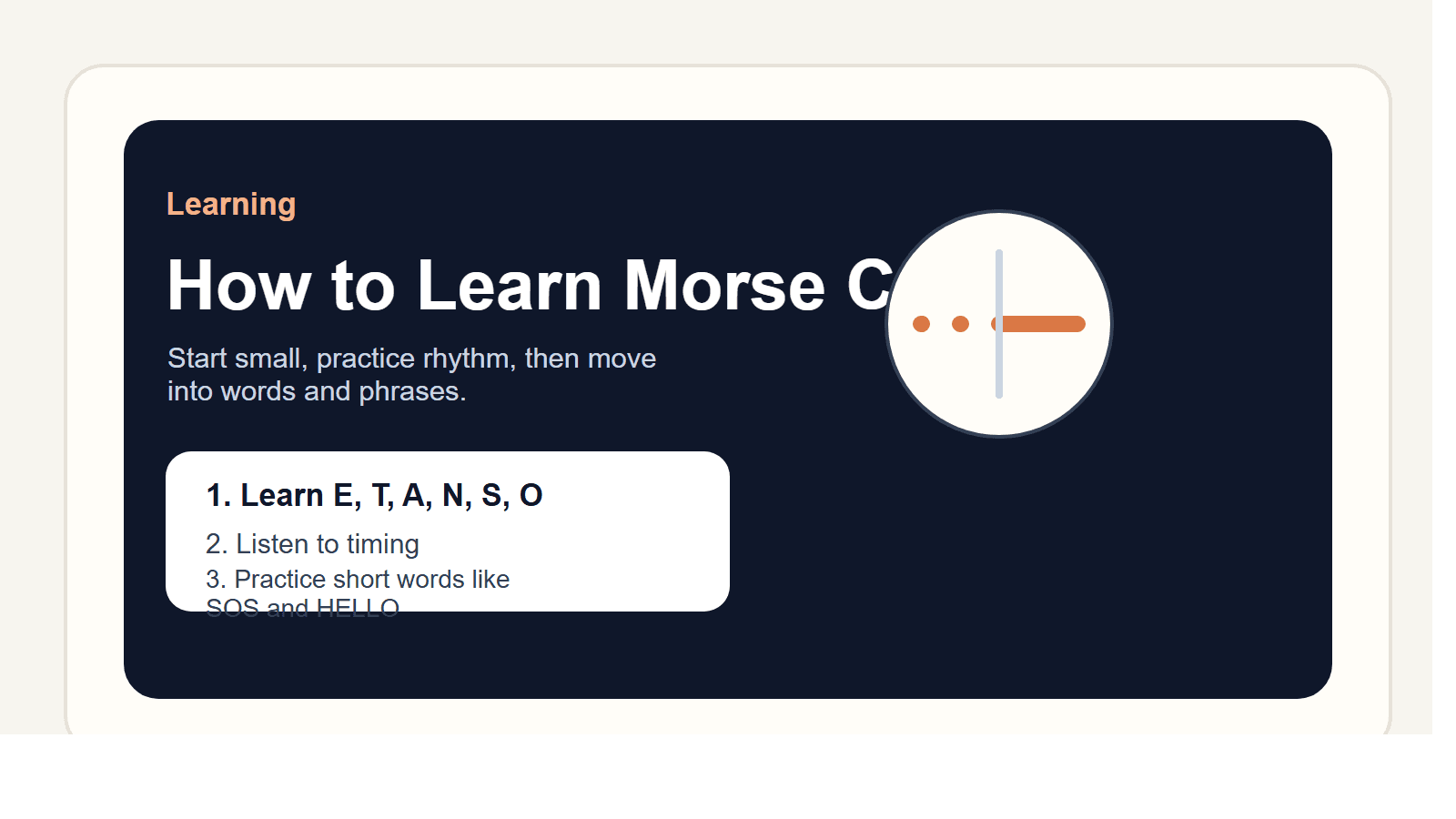
A practical way to learn Morse code is to start with a few common letters, use sound or light playback to learn timing, and then practice short words like SOS, HELP, and HELLO. Short daily sessions usually work better than trying to memorize the full chart at once.
Start with the simplest and most common patterns
Most beginners learn faster when they start with easy, high-frequency letters like E, T, A, N, S, and O. These characters help you get used to the rhythm of Morse code without overwhelming you with long patterns immediately.
Once those feel comfortable, move into short words such as SOS, HI, HELP, and HELLO. Familiar words make the code easier to remember because the patterns feel connected instead of isolated.
Train timing, not just recognition
Memorizing a chart is useful, but timing is what makes Morse code practical. Listening to playback or watching flash signals helps you feel the difference between dots, dashes, letter gaps, and word gaps.
That is why practice tools work better when they combine a chart, a translator, and playback instead of relying on static tables alone.
Use a short repeatable routine
A strong beginner routine is simple: review a few letters, listen to them, test a short word, then check the chart when something feels uncertain. Short daily sessions are more effective than one long memorization block.
As you improve, move from letters to words and then into full phrases. That progression builds recognition speed without forcing too much theory onto the first session.
Build confidence with small wins
A lot of beginners quit because they expect to learn the whole chart too quickly. A better approach is to measure progress in small wins: recognizing a handful of letters, reading one short word, or writing a phrase without checking every character.
Those small checkpoints matter because they show you the system is becoming familiar. Once Morse code starts to feel predictable instead of random, practice becomes much easier to sustain.
Use the chart as support, not as your only method
Charts are useful, but they work best as backup. If you only stare at the full alphabet table, the symbols can blur together. If you use the chart to confirm a letter after trying to recall it yourself, the pattern sticks more effectively.
This is why the strongest learning workflow usually combines three things: direct recall, chart validation, and playback. Each one reinforces a different part of the learning process.
Sources
Reference links used for this topic
Try the tool
Use the Morse code translator while you read
Check a letter, test a word, or compare a pattern directly in the main translator.
FAQ
Questions related to how to learn morse code
What is the easiest way to learn Morse code?
Start with a few common letters, use rhythm-based playback, and practice short words before trying to memorize the full chart.
Should I memorize the Morse code chart first?
No. The chart is useful as a reference, but most learners improve faster when they practice rhythm and common patterns at the same time.
What should beginners practice first?
Begin with simple letters like E, T, A, N, S, and O, then move into short words like SOS, HELP, and HELLO.
How long does it take to learn Morse code?
That depends on your practice frequency, but most beginners can become comfortable with basic letters and short words quickly if they practice in short, consistent sessions.
Is it better to learn letters or words first?
Start with a few core letters, then move into short words. Learning only isolated letters for too long can slow progress because real recognition depends on patterns working together.